The D&D Expert Set Is the Half of B/X Everyone Forgets
Ask a player about the 1981 Dungeons & Dragons Basic Set and you will hear about the first dungeon. Ask about the Expert Set and you will mostly get a shrug. For anyone who cares where today’s old-school games came from, that has it backwards.
In 1981, D&D split into two lines: Advanced Dungeons & Dragons on one side, and the Basic/Expert pair on the other, as Bell of Lost Souls recently laid out. Tom Moldvay edited that year’s Basic Set, which covers levels 1 through 3. The Expert Set, written by David Cook with Stephen R. Marsh and carrying cover art by Erol Otus, picks up at level 4 and runs to level 14, according to Wikipedia’s entry on the set.
That is the whole point of it. Basic gets you through the door. Expert is what you need once your character has survived long enough to have a reputation. Without it, the Basic Set is a very good three-level game.
It also came with some rules that would raise eyebrows at a modern table. Human characters kept climbing, but demi-humans hit a ceiling: dwarves stop at 12th level, elves at 10th, and halflings at 8th. The stated reason was to keep the classes in balance. We would call that a trade-off, not a flaw, but it is also the kind of rule a lot of newer designs quietly dropped.
Some of them dropped it on purpose. Basic Fantasy RPG, written by Chris Gonnerman and first released in 2007, is described as largely compatible with the 1981 Basic and Expert sets, yet it separates race from class and uses ascending armor class. Labyrinth Lord, from Daniel Proctor and Goblinoid Games in 2007, is built on Moldvay’s Basic and Cook’s Expert, and it stretches play out to 20th level. Old-School Essentials began life as B/X Essentials and cloned the same pair, with Classic Fantasy arriving in 2019 and Advanced Fantasy in 2020. Wikipedia’s retro-clone page notes that the Open Game License and the System Reference Document made games like these possible.
Bell of Lost Souls also ran a second piece this fall crediting the 1981 starter set with putting the Old School Renaissance on the map. We agree, with one adjustment. The starter set is the part people remember, but the clones above copied two books, not one. If you are picking an old-school game for a table that wants to play past a first adventure, the Expert half is the part doing the work.
Forty-five years on, new books are still being built on a pair of old ones. The Basic Set gets you into the dungeon, and the Expert Set is the reason those games still hold up when your character is no longer a beginner.
Shop this: D&D 2024 Player's Handbook
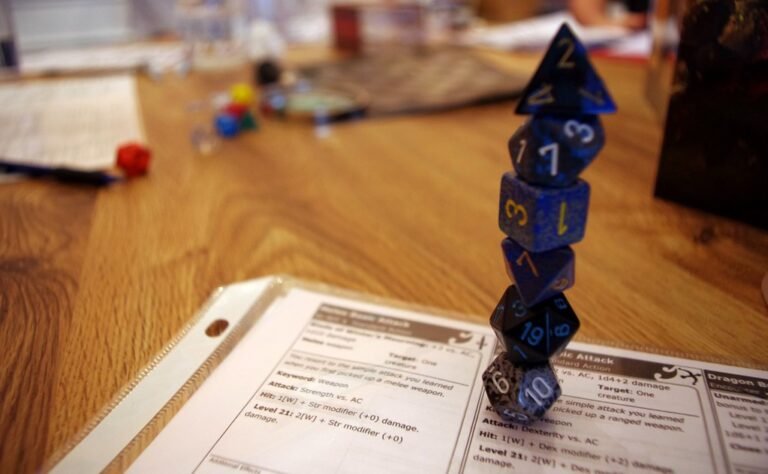
Featured image: “3/52 – Dice Tower” by Skakerman (Archive), licensed BY (via Openverse). Source.